 Telephone: +86-574-62838966
 E-mail : sale2@hengboyi.com

 en
en  English
 Español
 中文简体
中文简体
How Pixel-Controlled RGB and Warm White Pendant String Lights Transform Decorative Lighting
Content
- 1 1. Product Overview and Design Concept
- 2 2. RGB and Warm White in One Lighting System
- 3 3. Pixel-Level Control and Power Line Communication
- 4 4. RF Remote Control and User Convenience
- 5 5. Physical Construction and Cable Reliability
- 6 6. Electrical Design and Outdoor Suitability
- 7 7. Advantages Over Conventional Decorative String Lights
- 8 8. Manufacturing Strengths and Product Development Capability
- 9 9. OEM and ODM Advantages for Lighting Buyers
- 10 10. Applications in Residential and Commercial Spaces
- 11 11. Installation Planning and Best Practices
- 12 12. Maintenance, Storage, and Service Life Considerations
- 13 13. Why Manufacturing Experience Matters to Buyers
- 14 14. Purchasing Considerations for Distributors and Project Buyers
- 15 15. Frequently Asked Questions
- 15.1 Q1: What makes this string light different from a standard RGB string light?
- 15.2 Q2: Does the product provide warm white light as well as RGB colors?
- 15.3 Q3: How are the light points controlled?
- 15.4 Q4: How long is the string and how many lights does it contain?
- 15.5 Q5: Can several strings be connected into one longer chain?
- 15.6 Q6: Is the product suitable for outdoor use?
- 15.7 Q7: What type of power supply does it use?
- 15.8 Q8: What applications are suitable for the S14 string light?
- 15.9 Q9: Why is the transparent lampshade important?
- 15.10 Q10: What cable structure does the product use?
- 15.11 Q11: Can the lighting effects be used for both daily operation and special events?
- 15.12 Q12: What should buyers evaluate before placing a large order?
- 16 16. Conclusion
- 17 References
- 18 Product: S14 pixel-level controllable RGB warm white pendant string lights
Decorative lighting has evolved from a simple way to brighten an outdoor area into a flexible design tool for hospitality spaces, retail environments, residential gardens, celebrations, and seasonal displays. Modern users increasingly expect one lighting product to do more than provide a fixed glow. They want color variation, warm ambient illumination, dynamic effects, convenient control, safe operation, weather resistance, and an appearance that remains attractive when the lights are switched off.
The S14 pixel-level controllable RGB warm white pendant string light is designed to address these expectations in one compact lighting system. It combines RGB color capability with warm white illumination, power line communication, independent control of each light point, RF remote operation, transparent lampshades, and a structured pendant layout. The result is a decorative string light that can support both expressive visual effects and practical ambient lighting.
Unlike conventional string lights in which every bulb displays the same color or lighting pattern, this system is built around individual pixel control. Each light point can respond independently, allowing users to create more detailed, varied, and visually engaging effects. At the same time, the inclusion of warm white light means the product can deliver a comfortable, familiar glow for everyday use rather than functioning only as a colorful novelty.
This article examines the product’s design, optical performance, control technology, electrical structure, installation characteristics, outdoor suitability, manufacturing advantages, quality priorities, and commercial applications. It also explains why a specialized lighting manufacturer with experience in string lights and solar lighting is well positioned to develop and produce this type of advanced decorative product.
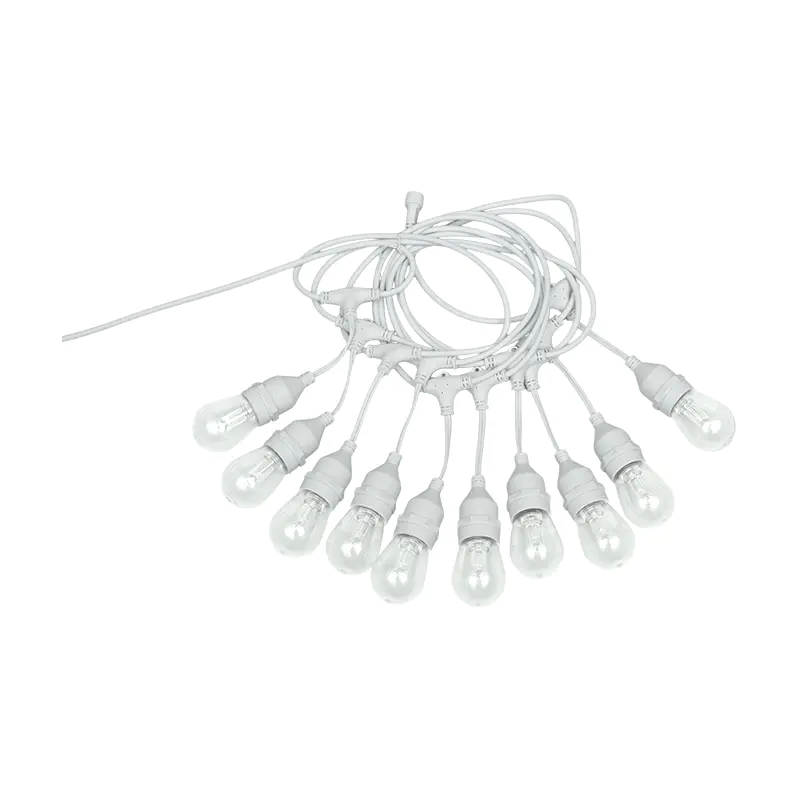
S14 pixel-level controllable RGB warm white pendant string lights
1. Product Overview and Design Concept
The S14 pendant string light uses a five-meter layout with ten light points and even 0.5-meter spacing. This arrangement creates a balanced decorative rhythm that can be installed along fences, balconies, pergolas, storefronts, garden structures, event backdrops, and other architectural or landscape features. The regular spacing helps users plan installations more easily while creating a consistent visual pattern across the illuminated area.
Each pendant includes a transparent lampshade designed to improve light transmission and visual clarity. Transparent material allows the light source to remain visually bright and recognizable while helping the emitted colors appear cleaner. It also contributes to a more refined appearance during daytime, when the product itself forms part of the decoration.
The design combines a PVC-sheathed main cable with a dual parallel cable structure. This cable arrangement supports durability while maintaining a neat appearance. In decorative lighting, the cable is visible from many angles, so its physical structure affects not only product life but also the overall impression of the installation. A well-organized cable layout can make a display appear more intentional and professional.
The product is supplied with a 0.25-meter extension cable, which provides additional flexibility during installation. Small differences between the position of a power outlet, an architectural edge, and the starting point of a decorative run can make installation difficult when the cable length is fixed. An extension section helps installers position the first light more conveniently and reduces the need for improvised modifications.
Electrical power is supplied through an AC220–240V input and a 12V, 0.5A European-standard adapter. The low-voltage output supports safer operation at the lighting section while the adapter provides a practical interface for connection to a standard electrical supply. The product is intended for environments from -10°C to 45°C and carries an IP44 waterproof rating, making it suitable for everyday outdoor decorative applications when installed and used correctly.
2. RGB and Warm White in One Lighting System
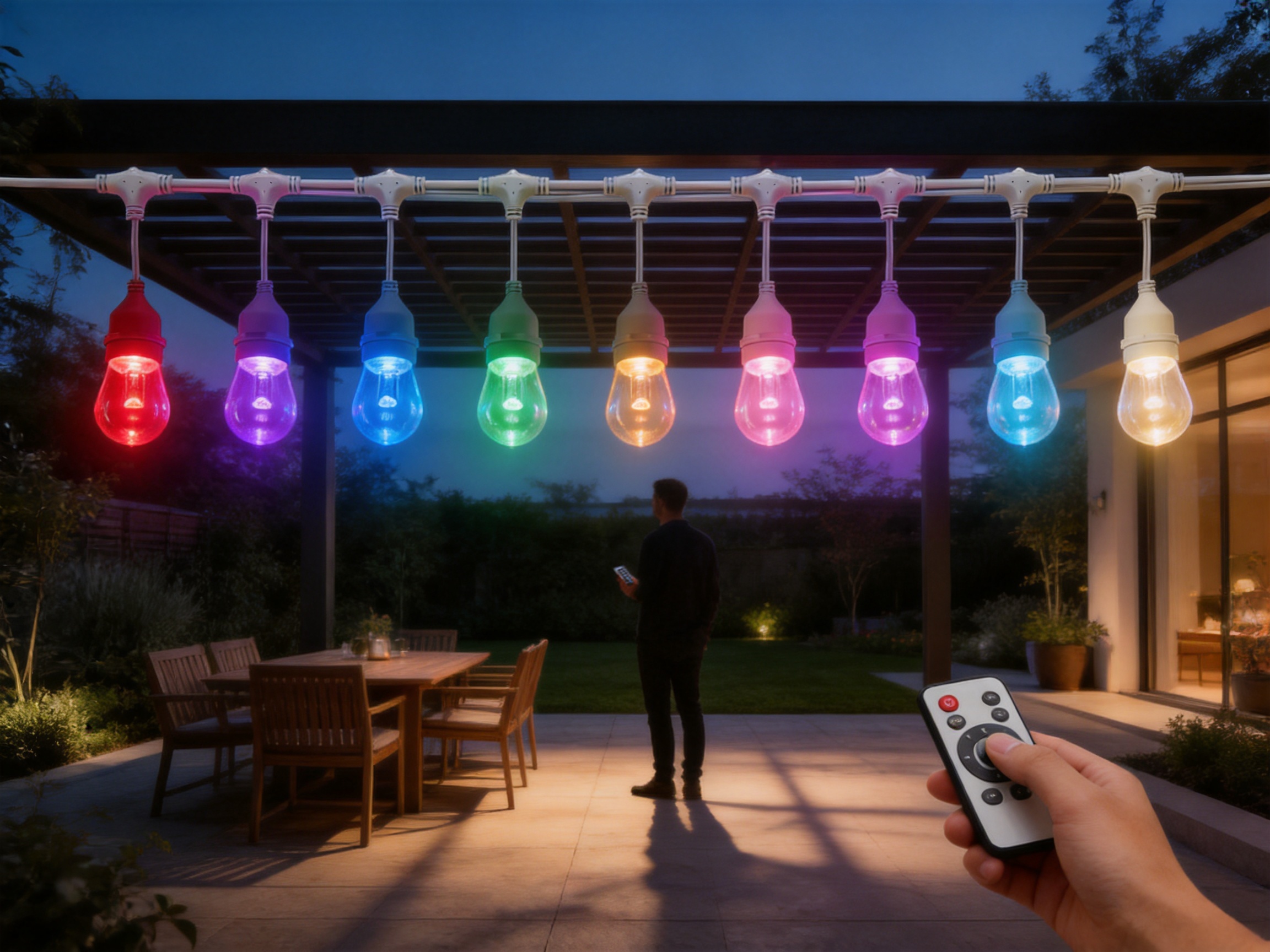
One of the product’s most important advantages is the combination of RGB and warm white light sources. RGB lighting provides red, green, blue, and mixed-color effects for celebration, branding, seasonal decoration, and creative atmosphere design. Warm white lighting provides a softer and more natural appearance for relaxed settings, dining areas, hospitality environments, entrances, and regular evening use.
Many decorative products are optimized for either colorful effects or conventional warm illumination. Products focused only on RGB may be visually exciting but unsuitable when users want a calm, welcoming environment. Fixed warm white products may create a pleasant atmosphere but offer limited flexibility for parties, festivals, promotional events, or themed displays. Combining both functions gives the S14 system a wider practical range.
Warm white light is especially useful in locations where visual comfort matters. Courtyards, homestays, terraces, cafés, and hospitality spaces often require lighting that supports conversation and movement without appearing overly harsh. The warm white function can help create a familiar, inviting mood, while RGB effects can be selected when the same space needs a more energetic or festive character.
The RGB function also expands the product’s value for temporary and seasonal installations. Red and green may support holiday themes, blue may suit cool contemporary designs, and mixed colors may bring movement and energy to parties or commercial displays. Because each point can be controlled independently, the visual result can extend beyond a single static color across the entire cable.
The combination is also useful for businesses that frequently change their presentation. A restaurant may use warm white during normal service, colored effects during a weekend event, and a specific color theme for a seasonal campaign. A retail store may use brand-related colors for a promotional display and return to warm white after the campaign. One product can therefore serve several decorative purposes instead of requiring separate lighting systems.
Balanced Illumination and Decorative Expression
The product is not designed merely to produce random color changes. Its value comes from balancing visual expression with usable illumination. Transparent shades help the light appear clear, while the warm white source gives the installation a practical ambient mode. Users can choose between subtle decoration and more noticeable dynamic effects according to the setting.
This balance is an important distinction from low-cost decorative lights that may focus on novelty but provide limited control, weak visual consistency, or an overly narrow range of use. A more capable lighting system can remain relevant after a single celebration or holiday because it can be reconfigured for everyday atmosphere lighting.
3. Pixel-Level Control and Power Line Communication
Pixel-level control is the defining technical feature of the S14 product. In a standard synchronized string light, a command may cause all bulbs to turn on, change color, or flash at the same time. That approach is simple, but it limits the number of patterns that can be created. With independent pixel control, each light point can receive and respond to its own instruction.
Independent control makes it possible to create flowing color transitions, alternating patterns, sequential illumination, moving effects, section-by-section changes, and other dynamic presentations. Even with ten light points, the system can produce a significantly more detailed appearance than a string in which all lamps behave identically.
The product uses power line communication technology to transmit control signals through the power connection. This approach allows data and electrical power to operate through the same general wiring structure, helping avoid the need for a separate control cable between each light point. A properly designed power line communication system can provide stable signal transmission and accurate response across the lighting run.
For decorative lighting, signal stability is important because inconsistent communication can result in delayed changes, incorrect colors, flickering, or loss of synchronization. A dependable control architecture helps each light point respond according to the intended effect. The result is a more coherent display and a better user experience when switching between modes.
Power line communication also supports a cleaner product structure. Decorative installations often need to remain visually appealing, and excessive external wiring can reduce the quality of the display. Integrating communication into the power-line structure helps preserve a simpler cable arrangement while supporting advanced control functions.
Dynamic Effects for Different Environments
The ability to produce multiple dynamic effects makes this string light suitable for more than one type of user. Residential users may prefer slow transitions, gentle color changes, or warm white illumination. Event organizers may choose stronger movement, alternating colors, or repeated sequences. Commercial users may need a pattern that attracts attention from a distance without making the environment uncomfortable.
Dynamic lighting should always be selected according to the purpose of the space. A hospitality venue may use slower effects during normal operation and more energetic sequences during special events. A retail display may choose colors that coordinate with merchandise or signage. A courtyard installation may alternate between warm white and soft colors to create depth without overwhelming the landscape.
Because each light point is independently controllable, designers can treat the string as a line of visual elements rather than a single glowing object. This supports more creative layouts and allows the product to contribute to the identity of a space.
4. RF Remote Control and User Convenience
The S14 string light is operated through an RF remote control system. Remote operation is convenient because users can change lighting effects without physically reaching the adapter or walking along the installation. This is particularly useful when the product is mounted above a doorway, along a roofline, around a pergola, or in another location that is difficult to access.
RF control can also be more convenient than systems that require direct visual alignment between the remote and the receiver. In practical decorative installations, the controller may be located behind a structure, inside a room, or at an angle relative to the user. A responsive RF remote helps make operation more flexible in these situations.
For commercial and event applications, remote control reduces the time needed to change the appearance of a display. Staff can adjust the lighting before customers arrive, switch from general illumination to a special event mode, or turn the system off after closing without dismantling or manually handling the lighting cable.
Ease of use is a major competitive factor in decorative lighting. A technically capable product can still disappoint if its controls are difficult to understand or unreliable. The combination of predefined dynamic functions and a responsive remote control makes the S14 system approachable for homeowners, installers, decorators, and commercial operators.
Control Simplicity and Practical Operation
A successful control system should provide useful options without creating unnecessary complexity. The product is designed around single-group control, meaning the supplied version operates as one lighting group. This makes setup straightforward for installations that require one coordinated string. Users can manage the system as a unified decorative element without configuring multiple zones.
The current version cannot be linked together. This specification should be considered during project planning. For a larger installation, buyers and designers should calculate the required coverage and determine whether separate groups are appropriate. Although the product is not intended to form one continuously linked chain in its current configuration, individual groups can still be positioned strategically to cover larger areas or create separate visual zones.
5. Physical Construction and Cable Reliability
Decorative string lights are exposed to repeated handling during installation, seasonal storage, adjustment, and removal. Cable construction therefore has a direct effect on long-term usability. The S14 product uses a PVC-sheathed main cable and a dual parallel cable structure to support durability and maintain a well-organized appearance.
PVC sheathing provides a practical protective layer around the cable. It helps guard the conductors against ordinary abrasion and supports the cable’s use in decorative environments. The dual parallel structure contributes to visual order and mechanical organization, which can be particularly valuable when the string is installed along a straight edge or displayed in a carefully designed pattern.
The cable must still be installed responsibly. Users should avoid sharp bends, excessive pulling, crushing, immersion, and contact with sharp architectural edges. The IP44 rating is suitable for everyday outdoor conditions involving splashing water and limited ingress protection, but it does not mean the product should be submerged or exposed to uncontrolled water accumulation.
Good installation practice includes placing the adapter in a suitable protected location, keeping connections away from standing water, securing the cable without damaging the insulation, and allowing the light string to hang naturally. Correct installation helps preserve both the appearance and the operating reliability of the product.
Transparent Lampshade Design
The transparent lampshade is another important construction detail. A shade is not only a protective component; it also influences how the light is perceived. Clear material can help preserve brightness and color visibility, allowing the RGB and warm white sources to appear more direct and transparent.
The lampshade contributes to the pendant character of the product. When the lights are arranged along a cable, the visible shades create a repeated architectural rhythm. During the day, they form part of the installation’s decorative structure. At night, they become luminous points that define the perimeter, overhead line, or visual backdrop.
Compared with opaque or poorly finished shades, a clear and consistent shade can provide a cleaner appearance across the entire string. Consistency is especially important in commercial displays, where uneven visual quality may affect the perceived value of the installation.
6. Electrical Design and Outdoor Suitability
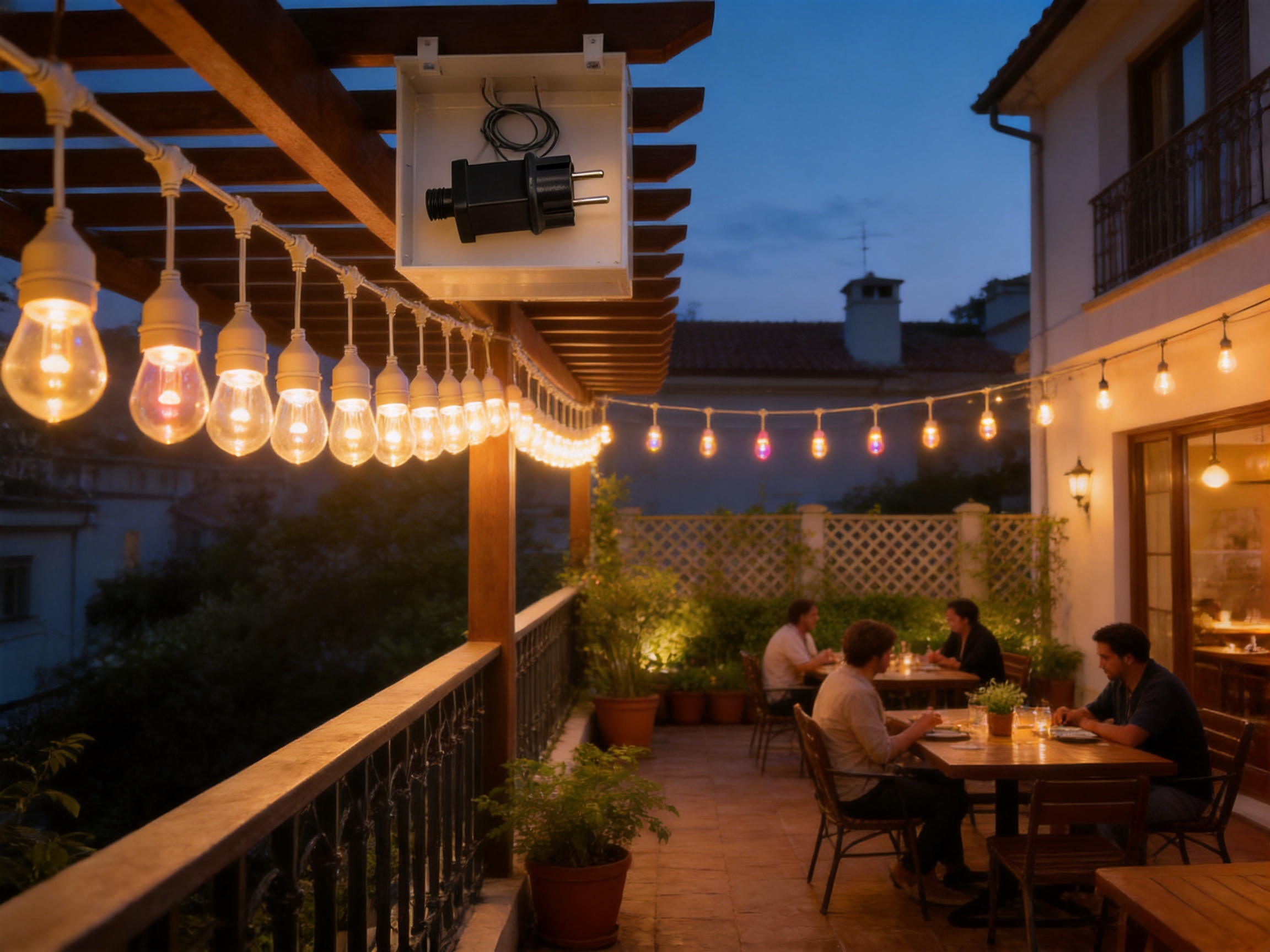
The product is specified for AC220–240V input and uses a 12V, 0.5A European-standard adapter. This arrangement separates the higher-voltage supply connection from the lower-voltage lighting section. The adapter serves as an important part of the system by converting the incoming supply into the voltage required by the light string and control components.
Low-voltage operation at the lighting section can be beneficial for decorative applications where people may be near the cable and pendant units. However, electrical safety depends on the complete installation. The adapter should be used according to its intended conditions, connections should remain protected, and the product should not be modified by unqualified personnel.
The operating temperature range of -10°C to 45°C supports a broad range of common outdoor environments. This range covers many seasonal applications, including spring and summer events, autumn displays, and moderate winter decoration. Buyers operating outside these conditions should evaluate the local environment and confirm suitability before installation.
The IP44 rating indicates protection appropriate for many everyday outdoor decorative locations. It can support use in courtyards, covered terraces, balconies, garden structures, and similar areas where the product may encounter ordinary splashing or light moisture. IP44 should not be interpreted as full waterproofing for immersion, high-pressure washing, or placement in areas that collect water.
| Specification | Product Information | Practical Significance |
|---|---|---|
| Lighting source | RGB plus warm white | Supports both colorful effects and comfortable ambient illumination |
| Control method | RF remote control | Allows convenient operation without direct access to the light string |
| Control architecture | Independent pixel control | Enables varied patterns and point-by-point lighting effects |
| Signal technology | Power line communication | Supports stable signal transmission through the power-line structure |
| String length | 5 meters | Suitable for compact decorative runs and defined installation areas |
| Number of light points | 10 | Creates an evenly distributed pendant pattern |
| Light spacing | 0.5 meter | Provides regular visual rhythm along the cable |
| Extension cable | 0.25 meter | Provides added flexibility between the power connection and first light point |
| Input supply | AC220–240V | Designed for compatible standard electrical systems |
| Adapter output | 12V, 0.5A | Supplies the lighting section through a lower-voltage output |
| Operating temperature | -10°C to 45°C | Supports many normal seasonal outdoor conditions |
| Protection rating | IP44 | Suitable for common outdoor decorative exposure when installed correctly |
| Group configuration | Single-group control | Provides straightforward operation for one coordinated string |
| Linking capability | Current version cannot be linked together | Project layouts should be planned around separate individual groups |
7. Advantages Over Conventional Decorative String Lights
The first major advantage over conventional string lights is independent pixel control. Basic products often offer only on and off functions or a limited set of synchronized patterns. Every lamp may change at the same time, creating a uniform but visually repetitive effect. The S14 system can make individual points behave differently, introducing movement, variation, and greater visual depth.
The second advantage is the dual-purpose lighting source. A conventional RGB-only product may be unsuitable for relaxed or hospitality-oriented environments, while a fixed warm white product may lack the energy required for celebrations and promotional displays. RGB plus warm white allows one product to support both expressive and functional decorative needs.
The third advantage is the use of power line communication for control signal transmission. A lighting system with advanced effects requires reliable coordination between its controller and light points. Power line communication supports a more integrated product structure and can help reduce the need for additional signal wiring.
The fourth advantage is RF remote operation. Many basic light strings depend on a small local button, a direct-line remote, or a limited controller. Remote control gives users greater freedom to operate the product after installation, particularly when the string is placed in a hard-to-reach location.
The fifth advantage is design quality. Transparent lampshades, even spacing, a structured cable system, and a pendant format create a more finished appearance. Decorative lighting is judged by its visual presentation as well as its technical performance. A product that looks intentional during both daytime and nighttime can provide more value to homeowners and commercial users.
The sixth advantage is installation flexibility. The five-meter length, ten-light arrangement, 0.5-meter spacing, and 0.25-meter extension cable make the system practical for defined decorative areas. It is large enough to create a noticeable visual feature but compact enough for applications where long, uncontrolled cable runs are unnecessary.
Comparison with Fixed-Color Products
Fixed-color string lights are easy to understand and can be suitable for a single-purpose installation. However, they offer less flexibility when a user wants to change the atmosphere or reuse the product in another setting. The S14 system can move between warm white everyday use and RGB decorative modes, increasing its useful life across different occasions.
For hospitality businesses, this flexibility can reduce the need to purchase separate lighting products for ordinary evenings, seasonal events, and special promotions. For residential users, it means one product can support quiet outdoor dining, birthday celebrations, holiday decoration, and casual garden lighting.
Comparison with Synchronized RGB Products
Synchronized RGB products can create attractive color changes, but their effects are usually limited because every light point behaves in the same way. Pixel-level control creates more opportunities for movement and sequencing. The difference is especially visible when the product is installed along a long line or in a location where viewers can observe the individual pendants clearly.
Independent control also allows designers to vary the intensity and color relationship between neighboring points. Instead of seeing one solid band of color, viewers may see a sequence that travels along the cable or a pattern that alternates between warm white and selected RGB colors.
8. Manufacturing Strengths and Product Development Capability
The product is manufactured by Ningbo Hengboyi Lamp Co., Ltd., a lighting company founded in 2003 and focused on string lights and solar lighting products. Long-term specialization in these categories provides a practical foundation for developing products that combine decorative appearance, electrical control, cable construction, and outdoor suitability.
String light manufacturing requires coordination among multiple disciplines. The factory must manage light sources, lampshades, cable assemblies, controllers, adapters, connectors, packaging, and final inspection. A failure in any one area can affect the customer’s experience. A strong manufacturer therefore needs processes that connect product design, component selection, assembly, testing, and service.
The company’s product range includes waterproof string lights, LED decorative lights, solar lights, solar wall lights, curtain string lights, and flame-style lights. This range indicates experience across both mains-powered and solar-powered decorative lighting categories. It also creates opportunities for cross-category design knowledge, particularly in outdoor durability, light distribution, weather exposure, and user expectations.
Design and Engineering Coordination
Advanced decorative lighting is not created by selecting a light source alone. The engineering team must determine how the source interacts with the lampshade, how the cable carries power, how the controller communicates with each pixel, and how the adapter supports the total load. The S14 product reflects this type of system-level coordination through its RGB and warm white combination, power line communication, RF control, and structured cable design.
Engineering attention is also necessary for thermal behavior, connector fit, insulation, mechanical strain, and the relationship between the light points and the main cable. A product that performs well in a laboratory but is difficult to install or visually inconsistent in the field will not provide lasting value. Practical engineering therefore considers the entire user journey from unpacking to installation, operation, storage, and reuse.
Production and Assembly Control
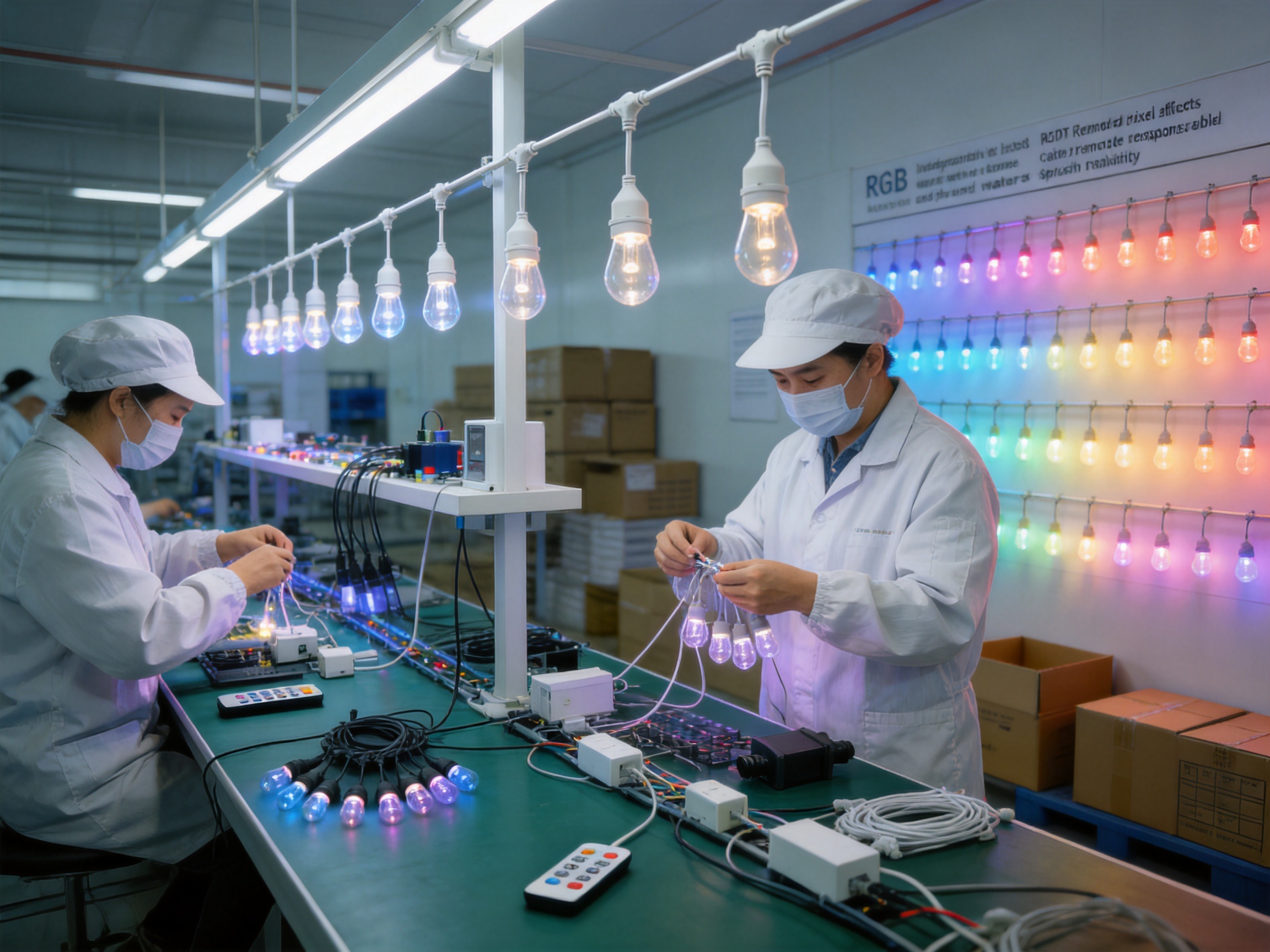
Manufacturing a ten-light pixel-controlled string requires consistent assembly across every light point. The factory must maintain correct spacing, secure electrical connections, reliable insulation, accurate shade installation, and consistent color output. Small inconsistencies can become obvious when multiple pendants are displayed together.
Controlled assembly processes help reduce variation. Production personnel need clear work instructions for cable preparation, component placement, soldering or connection operations, sealing, housing assembly, and final appearance inspection. Where automated or semi-automated equipment is appropriate, it can improve repeatability. Where manual craftsmanship is required, training and process supervision become especially important.
Component traceability is also valuable. Identifying production batches and key components helps a manufacturer investigate issues, manage replacement parts, and maintain consistent quality across repeat orders. For OEM and ODM customers, structured production records can support more reliable project management and future product revisions.
Testing and Quality Assurance
The company states that it is equipped with advanced production and testing facilities. For a product such as this, testing should address more than whether the lamps turn on. Functional checks can verify color operation, warm white performance, pixel response, RF remote commands, dynamic effects, and power line communication.
Electrical inspection can evaluate adapter output, current behavior, insulation condition, polarity, and connection reliability. Mechanical checks can examine cable strain, shade attachment, connector stability, and the ability of the assembled string to withstand normal handling. Appearance inspection can confirm consistent transparency, clean surfaces, even spacing, and acceptable finishing quality.
Environmental evaluation is also relevant. Since the product is intended for common outdoor decorative use and carries an IP44 rating, suitable production checks may include water-splash resistance procedures, enclosure inspection, and review of cable entry points. Such checks should be performed according to appropriate internal procedures and applicable customer requirements.
Quality assurance is most effective when it is integrated throughout production rather than left only to the final inspection stage. Incoming component checks, process inspections, functional testing, aging procedures where appropriate, and final sampling can work together to reduce the likelihood of defects reaching the customer.
9. OEM and ODM Advantages for Lighting Buyers
Many importers, distributors, retailers, hospitality groups, and lighting brands require more than a standard catalog item. They may need specific cable lengths, packaging formats, color combinations, controller functions, branding, plug configurations, or installation accessories. A manufacturer with experience in string lights and solar products can often provide a more effective development path for these requirements.
Hengboyi offers flexible customization services in addition to standard product options. Customization may involve appearance, product configuration, packaging, labeling, or electrical details, subject to engineering review and production feasibility. For buyers, this can help create a product line that is more closely aligned with a target market rather than relying only on generic designs.
OEM and ODM cooperation also benefits from a manufacturer’s existing knowledge base. A factory that has already addressed cable durability, lampshade construction, outdoor exposure, solar charging, control functions, and decorative presentation can use that experience to shorten the development process. The buyer gains access to a manufacturing partner familiar with the practical challenges of lighting production.
For a pixel-controlled product, communication between the buyer and factory is especially important. Product specifications should define the number of light points, spacing, total length, control method, color functions, adapter requirements, waterproof expectations, temperature range, packaging, and group configuration. Clear communication at the quotation and sample stages helps prevent misunderstanding during mass production.
International Trade and Logistics Support
Lighting products are often sold across international markets, each with different electrical systems, packaging expectations, language requirements, and distribution channels. The company provides international trade and logistics support, which can assist buyers with order coordination and shipment preparation.
Reliable logistics planning includes product quantity confirmation, carton design, protective packaging, labeling, documentation, and shipment scheduling. Decorative string lights contain cables, shades, adapters, and control parts that must be protected from compression and impact during transportation. Proper packaging helps ensure that the product arrives in a condition suitable for retail presentation or project installation.
For distributors, dependable supply and communication are as important as the product itself. A manufacturer that can support repeat orders, product updates, and after-sales questions helps reduce the operational burden on the buyer.
10. Applications in Residential and Commercial Spaces
The S14 string light is suitable for courtyard decoration because its pendant format can define a seating area, garden boundary, walkway edge, or architectural feature. Warm white mode can create a relaxed evening environment, while RGB effects can support celebrations and seasonal use.
On balconies and terraces, the five-meter length can be arranged along a railing, overhead support, or wall edge. The transparent shades remain visually light, helping the installation complement rather than dominate a compact space. Users should ensure that the cable is securely supported and that the adapter is protected from unsuitable exposure.
In cafés, restaurants, and homestays, lighting contributes strongly to the customer’s perception of atmosphere. Warm white illumination can make an outdoor seating area feel welcoming, while selected RGB effects can highlight special events or themed evenings. The remote control allows staff to change the mood without interrupting operations.
Commercial displays can use pixel-level effects to attract attention to a storefront, entrance, product area, or promotional structure. The ability to vary colors and sequences gives designers more options than fixed-color strings. The light points can be used as a visual line that guides attention through a display.
Holiday lighting setups are another suitable application. The product can support seasonal color palettes and dynamic modes without requiring permanent installation. After the holiday period, it can be reused for parties, garden decoration, or general ambient lighting.
Party and event organizers can use the string as part of a backdrop, canopy, entrance, stage edge, or dining area. Since the product is a defined five-meter group, it can be planned as one visual module. Multiple independent groups may be placed in different areas when a larger venue requires broader coverage, while recognizing that the current version cannot be linked into one continuous chain.
Creating a Homestay Atmosphere
Homestays and boutique accommodations often compete through atmosphere as much as through functional facilities. Thoughtfully placed lighting can make outdoor areas more memorable and encourage guests to use courtyards, balconies, patios, and shared spaces after dark.
Warm white mode is suitable for quiet evenings, dining, and conversation. RGB effects can be reserved for celebrations, themed events, or specific seasonal periods. Because the same string can serve multiple purposes, property owners can refresh the appearance of a space without replacing the complete installation.
11. Installation Planning and Best Practices
Before installation, users should measure the intended area and identify the nearest suitable power source. The five-meter lighting section and 0.25-meter extension cable should be considered together when planning the starting point. Measuring first helps prevent unwanted tension or an awkward position for the first pendant.
The cable should be supported at appropriate points rather than forced to carry excessive weight across a long unsupported span. Hooks, clips, or other suitable supports should be selected according to the installation surface. Users should avoid piercing or crushing the cable and should not use fasteners that can cut into the PVC sheath.
The adapter should be positioned in a location protected from direct accumulation of water and excessive heat. Connections should be kept off the ground where possible, and the cable should be routed to prevent tripping hazards. Outdoor installations should be inspected periodically, especially after severe weather or before an important event.
The product should not be submerged, exposed to high-pressure water, or installed where water can collect around the adapter or connection points. IP44 protection is appropriate for ordinary outdoor decorative conditions, but careful placement remains essential for safe and reliable operation.
After installation, users should test all functions before finalizing the cable position. Confirming RGB colors, warm white operation, dynamic effects, independent pixel response, remote control range, and adapter operation at an early stage makes troubleshooting easier.
Planning Multiple Groups
Because the current version uses single-group control and cannot be linked together, large projects should be divided into planned zones. Each group can function as a separate decorative element. Designers may align several groups visually while maintaining separate electrical and control arrangements.
This configuration can be advantageous when a venue needs different areas to operate independently. For example, a restaurant may use one group near the entrance and another around the dining terrace. A retail space may place separate groups in different display windows. Separate groups also make it easier to turn off one area while keeping another illuminated.
12. Maintenance, Storage, and Service Life Considerations
Regular inspection helps preserve the appearance and performance of decorative lighting. Users should look for damaged insulation, loose shades, exposed connections, unusual flickering, or signs of water accumulation. Any damaged product should be disconnected and assessed before further use.
Cleaning should be performed with methods suitable for the lampshade and cable materials. Abrasive tools, aggressive chemicals, and high-pressure water may damage surfaces or protective layers. A soft, clean cloth and appropriate gentle cleaning method are generally preferable for removing dust and ordinary outdoor residue.
When the product is removed for storage, it should be dried if necessary and coiled without tight kinks. Heavy objects should not be placed on the cable or shades. The adapter and remote control should be stored with the product so that all components are available for the next installation.
Seasonal storage is particularly important for event and holiday users. Careful removal reduces strain on connections and prevents the cable from becoming tangled. Keeping the original packaging or using protective storage materials can help reduce impact and compression during the off-season.
Service life depends on operating conditions, installation quality, electrical supply, handling, and environmental exposure. A product designed for outdoor decorative use can perform reliably when used within its specified temperature and protection conditions, but no IP rating or cable design eliminates the need for sensible care.
13. Why Manufacturing Experience Matters to Buyers
Buyers often evaluate decorative lighting based on photographs, price, and basic specifications. Those factors are important, but manufacturing experience can have an equally significant effect on the final result. Consistent color output, stable controls, clean cable assembly, reliable adapters, accurate spacing, and acceptable packaging all depend on production discipline.
A company founded in 2003 has had the opportunity to develop knowledge across changing lighting technologies and market requirements. The transition from traditional decorative lamps to LED systems, solar products, remote controls, and more advanced pixel functions requires ongoing adaptation. Experience can help a manufacturer recognize common production risks and build more effective inspection procedures.
Specialization also matters. A company focused on string lights and solar lighting products is familiar with the practical details that distinguish decorative lighting from general indoor fixtures. These details include flexible cable management, outdoor enclosure considerations, lampshade appearance, installation convenience, seasonal use, and the relationship between light output and decorative mood.
For buyers seeking reliable supply, a manufacturer’s strengths should be considered as a complete package: product development, production capacity, testing facilities, quality control, customization, logistics coordination, and after-sales service. The S14 product demonstrates how these capabilities can be combined in a modern decorative lighting solution.
14. Purchasing Considerations for Distributors and Project Buyers
Before ordering, buyers should confirm the exact lighting configuration and intended use. Important points include the number of light points, total string length, spacing, RGB and warm white functions, remote-control method, adapter specification, plug requirements, temperature range, IP rating, and whether the product can be linked. The S14 version is a single group and cannot currently be linked together.
Buyers should also consider whether the product will be sold for residential use, hospitality projects, retail decoration, events, or seasonal programs. Different channels may require different packaging, instructions, labels, spare parts, or demonstration materials. A clear product presentation can help distributors explain the difference between pixel-level control and ordinary synchronized string lighting.
For large orders, purchasers may request samples before mass production. Sample evaluation can include visual appearance, cable flexibility, remote operation, color performance, dynamic effects, adapter behavior, and installation suitability. Testing the product in a realistic environment is often more informative than evaluating it only on a tabletop.
Project buyers should prepare a layout showing where each group will be installed. This is especially important because the current product is not designed for direct linking. A planned layout can identify the required number of groups, power access points, control positions, support locations, and protected areas for adapters.
15. Frequently Asked Questions
Q1: What makes this string light different from a standard RGB string light?
The main difference is independent pixel control. Each light point can be controlled separately rather than having every lamp perform exactly the same color or lighting change. This allows more varied dynamic effects and more detailed visual patterns.
Q2: Does the product provide warm white light as well as RGB colors?
Yes. The product combines RGB and warm white light sources. RGB supports colorful decorative effects, while warm white provides a comfortable illumination mode for everyday atmosphere lighting, hospitality spaces, courtyards, and residential use.
Q3: How are the light points controlled?
The system uses power line communication technology for signal transmission and an RF remote control for user operation. This combination supports coordinated control while allowing users to operate the product from a convenient position.
Q4: How long is the string and how many lights does it contain?
The product has a five-meter lighting section with ten light points. The lights are arranged at even 0.5-meter intervals. It also includes a 0.25-meter extension cable to provide additional installation flexibility.
Q5: Can several strings be connected into one longer chain?
The current version is designed for single-group control and cannot be linked together. Larger projects should therefore be planned using separate groups and suitable power and control arrangements.
Q6: Is the product suitable for outdoor use?
It is designed for common outdoor decorative environments, with an operating temperature range of -10°C to 45°C and an IP44 rating. It should be installed responsibly, with the adapter and connections protected from standing water, immersion, and unsuitable exposure.
Q7: What type of power supply does it use?
The input is AC220–240V, and the product is supplied with a 12V, 0.5A European-standard adapter. Buyers should confirm that the electrical supply and plug configuration are suitable for their market and installation.
Q8: What applications are suitable for the S14 string light?
Suitable applications include courtyard decoration, commercial displays, holiday lighting, parties, homestays, terraces, balconies, cafés, restaurants, event backdrops, and other decorative environments that benefit from adjustable color and warm illumination.
Q9: Why is the transparent lampshade important?
The transparent lampshade helps create clear and visually bright light effects. It also contributes to the product’s appearance during the daytime, when the lamps are not illuminated but remain part of the decorative installation.
Q10: What cable structure does the product use?
The product uses a PVC-sheathed main cable with a dual parallel cable structure. This design supports durability, organized installation, and a visually consistent appearance along the lighting run.
Q11: Can the lighting effects be used for both daily operation and special events?
Yes. Warm white mode can support daily ambient lighting, while RGB colors and dynamic effects can be used for parties, holidays, promotions, and themed events. This dual-purpose capability increases the product’s versatility.
Q12: What should buyers evaluate before placing a large order?
Buyers should confirm the lighting functions, string length, spacing, adapter, plug, operating conditions, IP rating, remote control, group configuration, packaging, customization requirements, and installation plan. A sample evaluation is recommended for larger projects.
16. Conclusion
The S14 pixel-level controllable RGB warm white pendant string light represents a more flexible approach to decorative illumination. Its independent pixel control, power line communication, RGB and warm white light sources, RF remote operation, transparent lampshades, organized cable structure, and practical five-meter layout give it advantages over simpler fixed-color or synchronized products.
Its value lies not in one feature alone but in the way the features work together. The product can create colorful dynamic effects while still providing a warm white mode for comfortable everyday use. It can serve residential, hospitality, commercial, holiday, and event applications. Its defined spacing and extension cable support installation planning, while the PVC-sheathed dual parallel cable structure contributes to durability and visual order.
The product also benefits from the manufacturing foundation of Ningbo Hengboyi Lamp Co., Ltd., a company with experience in string lights, solar lighting products, outdoor decorative lighting, customization, quality control, international trade, and after-sales support. Advanced production and testing facilities, combined with category specialization, provide a strong basis for consistent product development and supply.
For buyers seeking a decorative string light that offers more creative control than a basic synchronized product, the S14 system provides a practical and visually expressive option. When installed within its specified conditions and selected according to the needs of the project, it can transform ordinary outdoor and commercial spaces into more welcoming, memorable, and adaptable environments.
References
1. Product specification and technical information supplied for the S14 pixel-level controllable RGB warm white pendant string light.
2. Manufacturer profile and company information for Ningbo Hengboyi Lamp Co., Ltd.
3. General principles of LED decorative lighting design, color mixing, and ambient illumination.
4. General guidance on low-voltage lighting systems, outdoor installation, cable management, and electrical safety.
5. General principles of ingress protection ratings and responsible outdoor lighting installation.
6. General manufacturing practices for LED string lights, cable assemblies, lampshades, adapters, controllers, and quality inspection.
Product: S14 pixel-level controllable RGB warm white pendant string lights

Related Products
-
 View More
-
 View More
S14 Pendant Type E27 Warm White String Lights
-
 View More
US Standard S14 String Lights, Integrated E26 Spiral Socket, Warm White Light, Heavy-Duty Engineering Model
-
 View More
G40 Clip-on E12 Spiral Warm White String Lights
-
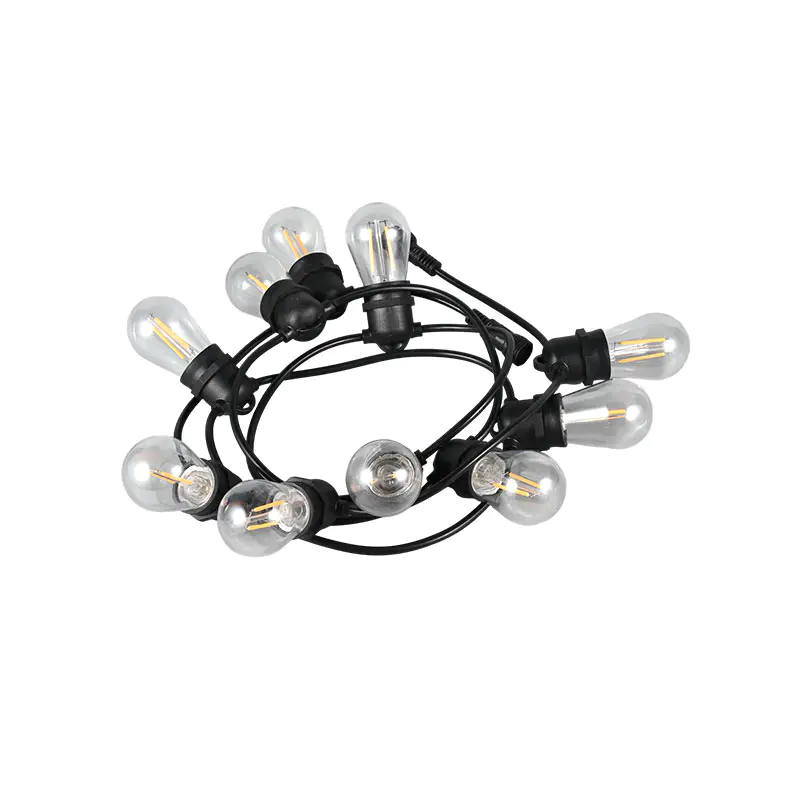 View More
S14 Outdoor E27 Warm White String Lights
-
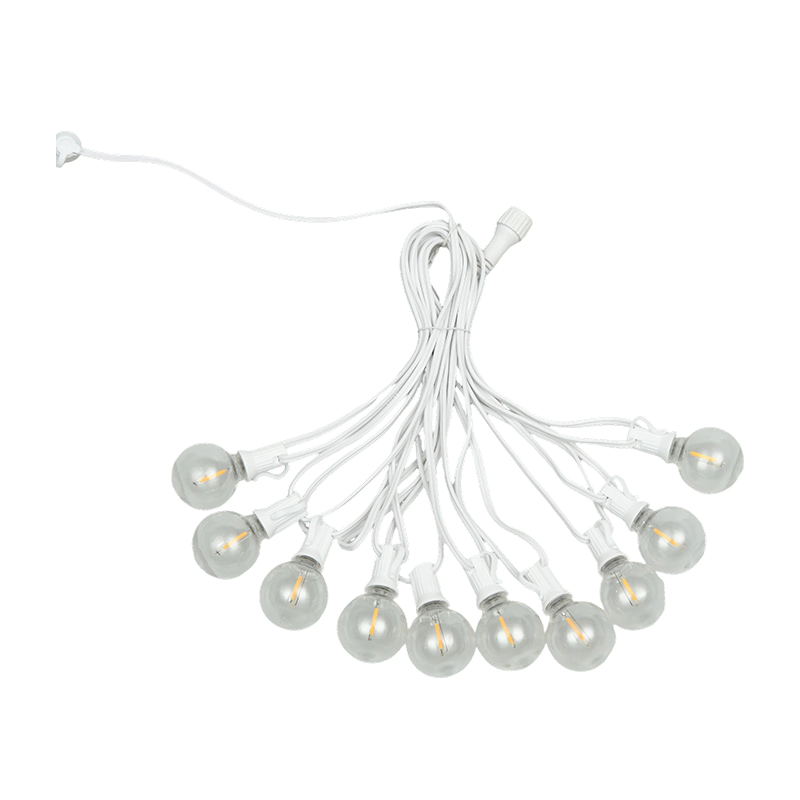 View More
G40 Clip-on E12 Spiral Warm White String Lights(White style)
Hengboyi are always ready to help you and answer your question if you need.
Request A Quote
Contact Info.
 Mob: +86-13901119074
 Tel: +86-574-62838966
 E-mail: sale2@hengboyi.com
 Add: No. 18 Rongchuang Road, Mingwei Village, Lizhou Street, Yuyao City, Ningbo, Zhejiang Province, China
Quick Links
Product List
QR CODE
Copyright Ningbo Hengboyi Lamp Co., Ltd. All rights reserved.
China best outdoor decorative solar lights Manufacturer
Custom decorative string lights indoor Factory

